Every morning Almaty wakes up in motion. Buses head out onto their routes, trolleybuses cross the city streets, schoolchildren set off for class, and thousands of residents travel to work, study and meetings. Behind the familiar rhythm of the city stands the work of transport people — drivers, mechanics, dispatchers, engineers and specialists for whom the reliability of public transport is built from many decisions taken every day.
Modern public transport has to meet the changing demands of a large city. It is not only about the number of vehicles, but also about the comfort of the journey, technical reliability, accessibility and the impact on the environment.
Road Transport Workers' Day is a good occasion to remember those whose work rarely takes centre stage, yet without whom the life of a modern city is hard to imagine. For Almatyelectrotrans LLP it is the professional holiday of the people who keep one of Kazakhstan's largest cities moving and help it keep its usual rhythm even at the busiest hours.
A scale measured in daily work
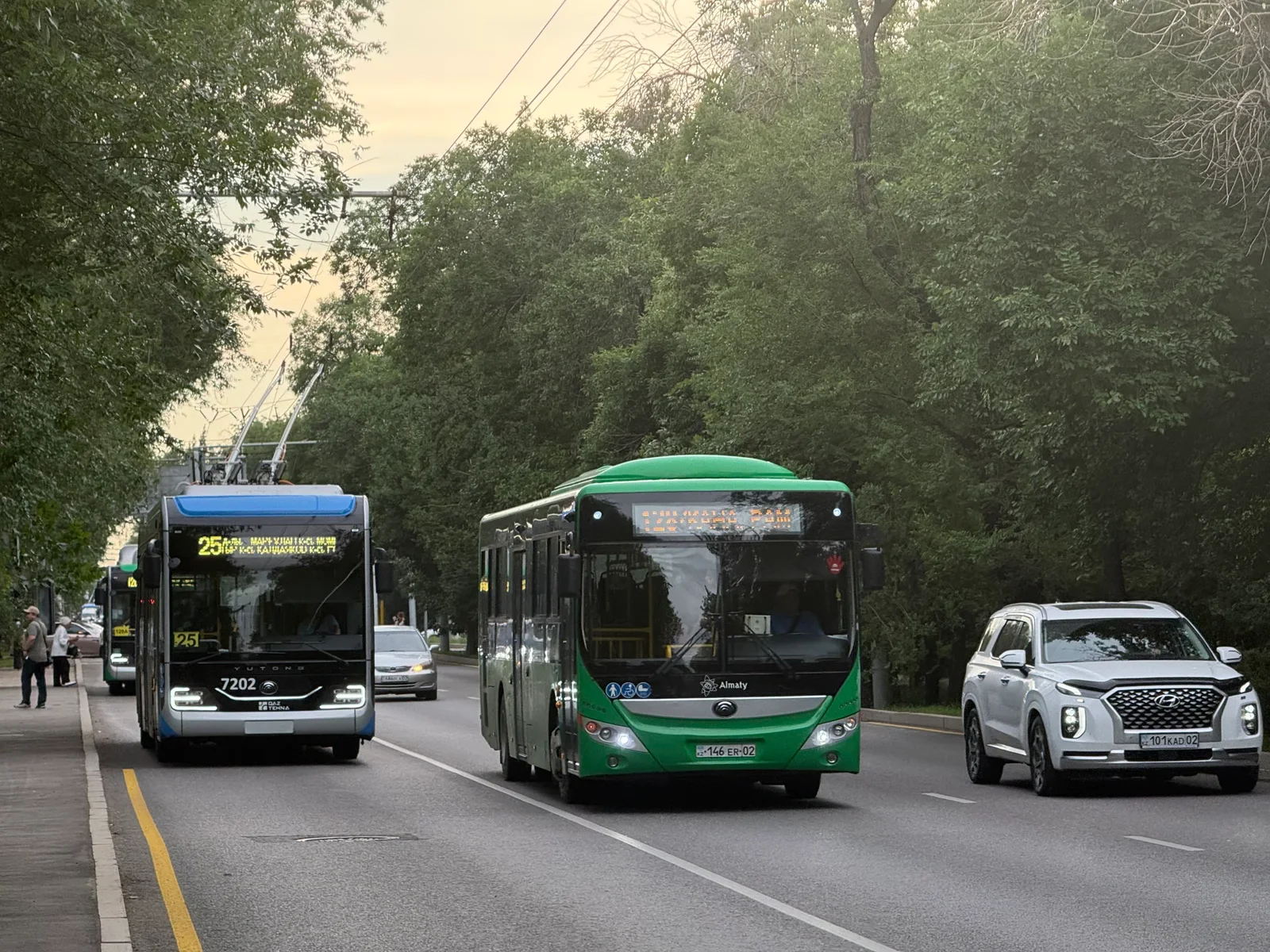
Public transport is much more than buses on the streets. Behind every trip is a complex system in which drivers, technical services, dispatchers and the specialists who send vehicles out onto the line must work in step. There are no minor tasks here: a timely departure, a vehicle in good order and a kept schedule directly decide how comfortable the journey will be for the passenger.
Almatyelectrotrans brings together five bus depots, a trolleybus depot and a school bus depot, which every day connect different districts of Almaty and help residents reach their work and studies, medical institutions, social facilities and transfer points to other kinds of public transport. It is a large team in which the driver is responsible for the safety of passengers on the road, the mechanic checks that the vehicle is ready for the trip, the dispatcher oversees the organisation of traffic, and technical specialists keep the equipment running. The passenger sees the result of their joint work in the simplest and most important things: the bus arrives, the doors open, the journey continues.
Renewal as part of the city’s development
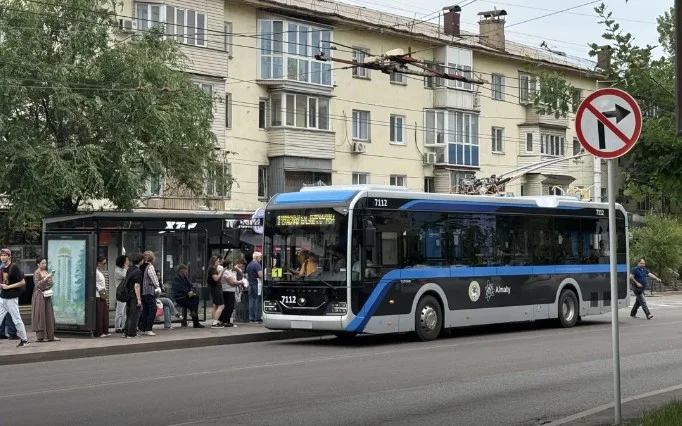
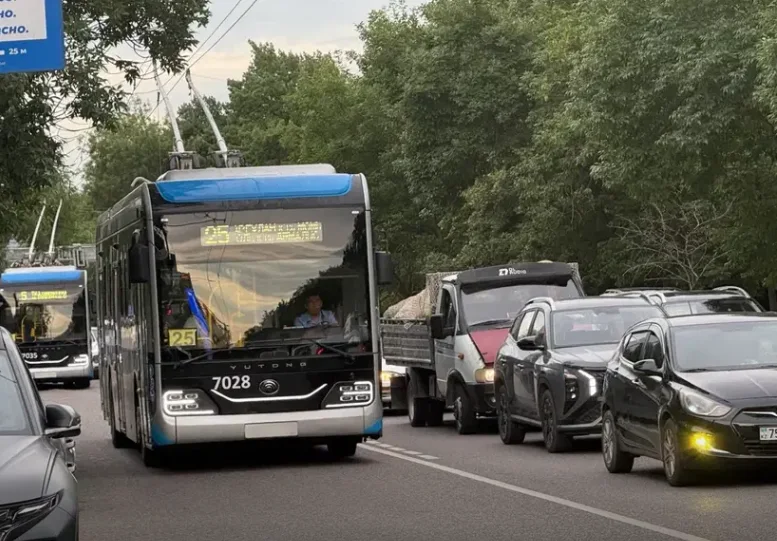
An important stage in the development of Almatyelectrotrans was the renewal of the trolleybus fleet. In 2023–2024 the company received 212 new trolleybuses.
Electric transport holds a special place in urban mobility: it carries large numbers of passengers with no exhaust emissions while in motion. Alongside the renewal of the rolling stock, the modernisation of the infrastructure matters too — the overhead contact network, cable lines and traction substations on which the stable operation of trolleybuses depends.
Today the fleet serves nine routes with an average ridership of about 130,000 passengers a day.
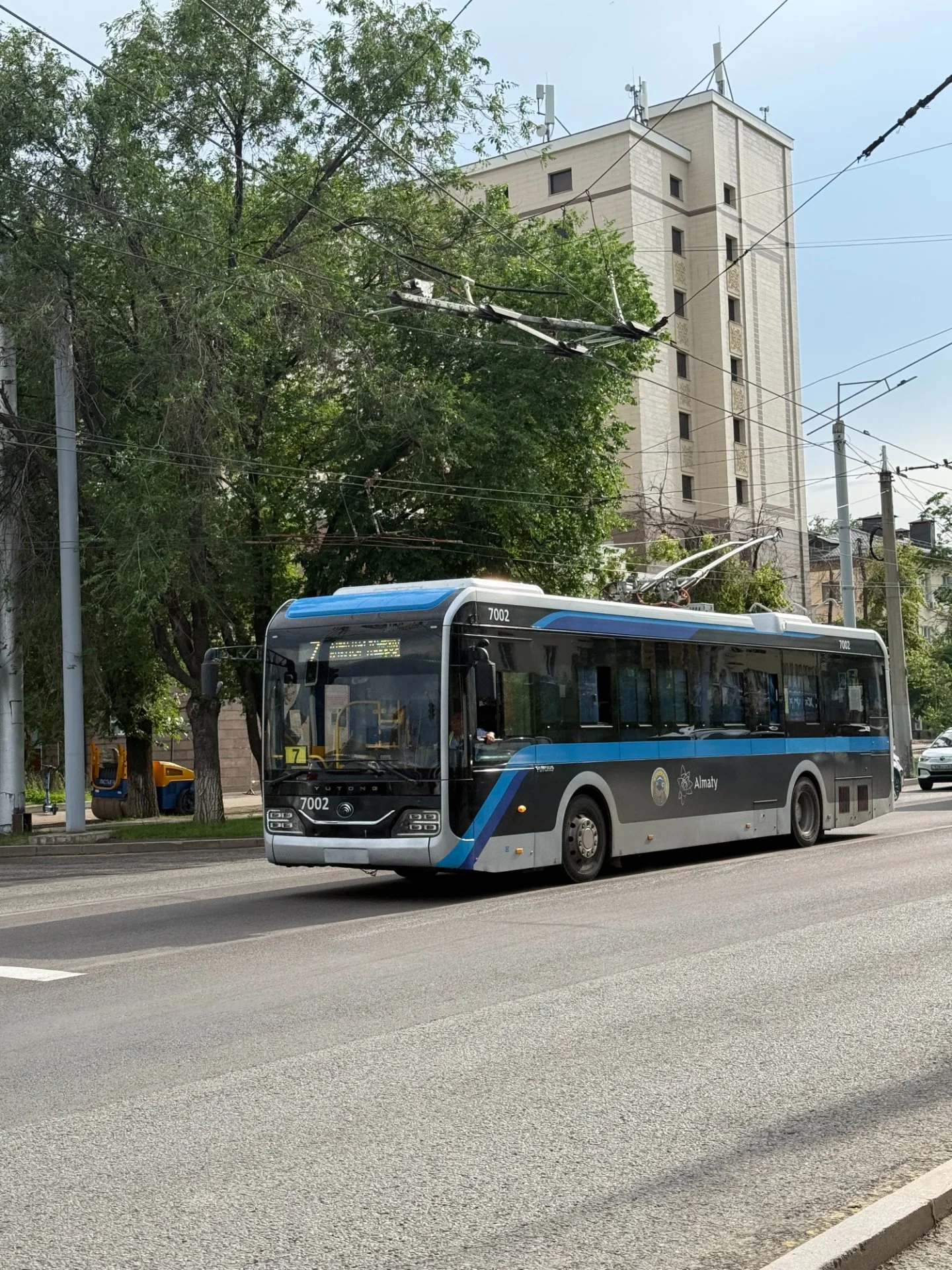
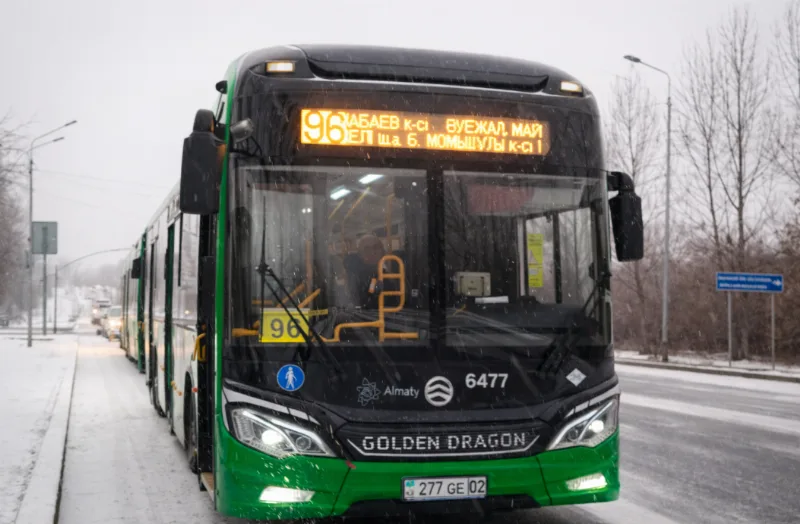
The bus fleet is being renewed in parallel. In 2026 the company is introducing new buses on some routes, including Golden Dragon, replacing part of the vehicles that ran before and increasing capacity on busy corridors. Such changes help keep the fleet technically ready and meet the needs of passenger flows.
Renewal is not only about new vehicles but also about improving the whole system: from organising departures to maintenance and repair. A modern bus must not simply be new — it must go out on the line every day and do its job.
A special responsibility: school transport
There is one area of the company's work where reliability takes on special meaning — carrying children.
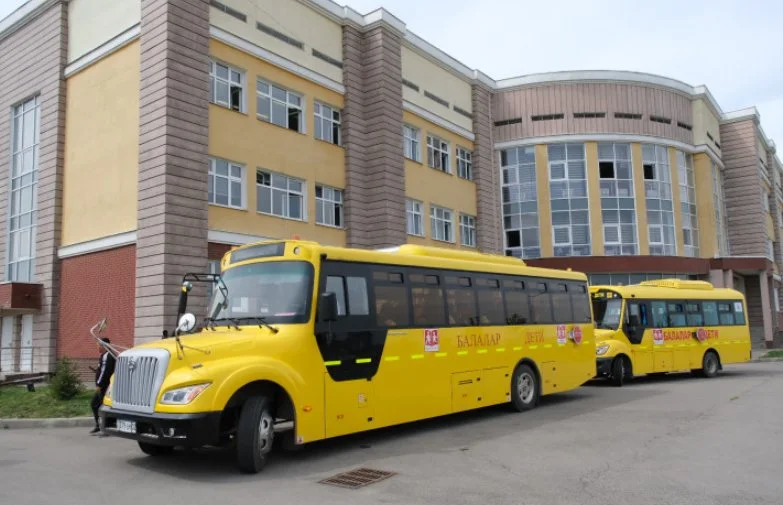
For a child, the school bus becomes part of the daily route, and for parents it is an important source of peace of mind. In the morning children must be brought to school on time for the start of lessons, and after school they must be taken home. This work calls for careful organisation, a kept timetable and heightened attention to safety.
In Almaty the school transport programme covers dozens of schools. According to the city education department, 12,794 children use school buses in 2026, on routes covering 61 schools. The number of buses involved and their timetables are set according to the requests of schools and the needs of families.
School buses are fitted with safety equipment, including seat belts, video surveillance and navigation systems, as well as equipment needed to carry children with special needs. Adults accompany the children on every trip.
Behind each such route lies responsibility not only to the passengers but also to their families. The driver's attentiveness, the technical condition of the bus and the coordination of everyone involved matter most here.
A profession in which everyone matters
Transport work demands a combination of professional skill, composure and discipline. The city road is unpredictable: traffic density changes, jams form, and the weather affects travel speed. A public transport driver has to take all of this into account while keeping attention on the road and on the passengers inside.
The work of those who stay behind the scenes is just as important. Technical specialists prepare vehicles for departure, carry out maintenance and repairs, and check equipment. Dispatch services coordinate the routes. How steadily the company copes with its daily load depends on their decisions.
The profession also has a special continuity. Experienced staff pass on to younger colleagues knowledge that cannot be learned from instructions alone: how to act in a difficult situation, how to understand the machinery, how to stay calm and feel responsible for one's work.
A telling example is the company's trolleybus driver Turgunzhan Autov, with 44 years of service, who was awarded the Order of Kurmet in September 2026. Behind this story are decades of professional life and devotion to work that demands constant attention and leaves no room for indifference.
Movement that unites
Developing public transport is a continuous process. The city changes, new residential districts appear, and the need for convenient transfers and a more rational route network grows. Requirements for vehicles, infrastructure and service quality change along with it.
For a transport company, development means being ready to meet these challenges: renewing the rolling stock, keeping it in good technical condition, improving how transport is organised and paying attention to safety. The modernisation of infrastructure, including working conditions for staff and facilities for vehicle maintenance, remains an important part of this work.
In the end, though, public transport is judged by people's everyday experience. Did they get to work on time? Was the ride comfortable? Did the child get to school safely? Trust in the city's transport system is built from such seemingly small things.
On Road Transport Workers' Day we wish everyone who keeps Almaty moving every day safe roads, reliable vehicles, considerate passengers and due recognition of their work. Behind every bus and trolleybus there is a person, and behind every route a common cause.
As long as the city is moving, the work of transport people goes on. In this everyday movement lie their professional responsibility, their contribution to the development of Almaty and their quiet but truly important service to the city.
Source: the article “Architecture of movement: transport as part of urbanism” in HD Magazine. Read the full article.